When it comes to protecting your car’s paintwork, vehicle owners often find themselves debating between ceramic coating and graphene coating. Both offer superior protection compared to traditional waxing or sealants, but they each come with their own strengths and differences. Ceramic coatings have been industry-standard for years, while graphene coatings are relatively new, marketed as a technological upgrade with added benefits.
Let’s dive deeper into what sets them apart in terms of materials, durability, finish, heat resistance, hydrophobic behavior, dust resistance, and price.
Base Material
The first and most important distinction lies in what these coatings are made of.
Ceramic coating is primarily based on Silicon Dioxide (SiO₂), also known as silica. This compound forms a hard and transparent protective layer on your car’s paint. In some premium formulas, Titanium Dioxide is added to enhance strength and durability. Essentially, ceramic coatings provide a shield that bonds chemically to your paint surface, making it resistant to scratches, UV rays, and mild chemical damage.
Graphene coating, on the other hand, is infused with graphene—a carbon structure that is just one atom thick but incredibly strong. Graphene’s physical properties are exceptional. Not only is it stronger than steel, but it is also flexible, electrically conductive, and highly resistant to heat. When infused into protective coatings, graphene enhances durability and introduces unique benefits like better heat dissipation and anti-static properties.
This difference in base material forms the foundation for all the performance variations between ceramic and graphene coatings.
Durability
Durability is often one of the most critical factors for car owners.
Ceramic coating offers long-lasting protection, usually between 3 to 7 years depending on the quality of the product and how well the car is maintained. While this is significantly better than traditional sealants or waxes, ceramic coatings still require careful upkeep to achieve their maximum lifespan.
Graphene coating is positioned as the next step up in durability. Thanks to the superior molecular structure of graphene, premium graphene coatings claim to last up to 10 years with proper care. The stronger bond created by graphene makes it more resistant to environmental wear and tear over time, which is one of the reasons it is considered more “future-proof.”
Simply put, ceramic is durable, but graphene takes longevity to another level.
Heat Resistance
A common frustration with ceramic coatings is water spotting. When your vehicle’s surface heats up under the sun and water droplets evaporate, minerals left behind create visible water spots.
Ceramic coating provides good heat resistance, offering significant protection from UV rays and high temperatures. However, it is more prone to water spotting because it doesn’t dissipate heat as efficiently.
Graphene coating handles heat better. Its ability to disperse and absorb heat helps reduce the risk of water spots, making it particularly useful in hot climates or for cars that often stay outdoors. This characteristic alone makes graphene an attractive option for car enthusiasts who want fewer maintenance headaches.
Gloss and Finish
A car’s aesthetic appeal is often one of the biggest reasons people invest in paint protection.
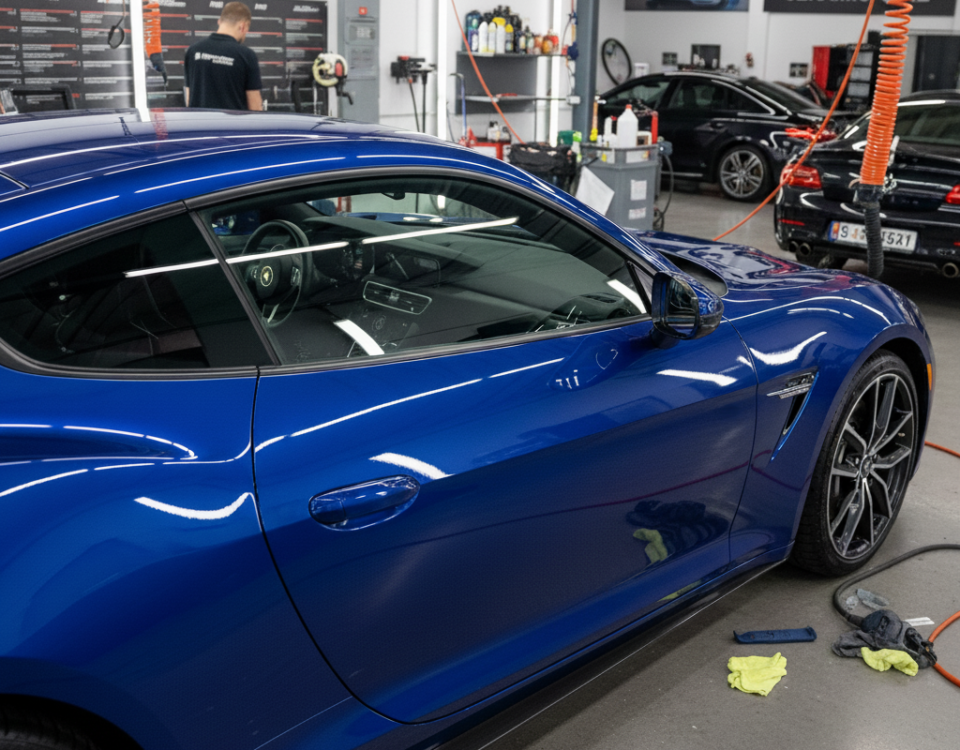
Ceramic coatings are well-known for providing a deep, candy-like gloss and an eye-popping shine. They also enhance the color depth, making darker shades of paint look especially vibrant.
Graphene coatings provide a slightly different visual effect. Instead of the candy-like shine, they give the vehicle a richer and darker appearance. This creates a smooth, wet-look finish that many enthusiasts describe as more luxurious. Additionally, graphene’s anti-static properties play a role in keeping dust away, ensuring the car stays looking clean for longer.
If you love an ultra-glossy mirror-like finish, ceramic is the winner. If you prefer a darker, richer aesthetic with added practicality, graphene is more appealing.
Hydrophobicity (Water Behavior)
Both ceramic and graphene coatings are excellent when it comes to hydrophobic properties, but there are subtle differences.
Ceramic coating ensures that water beads up and runs off the paint surface with ease. This makes cleaning easier and protects the surface from contaminants dissolved in water.
Graphene coating takes this effect a step further. With stronger water contact angles, graphene-coated cars see water roll off even faster and more efficiently. This enhanced beading not only makes washing easier but can also improve visibility when applied to glass surfaces, like windshields.
For those living in rainy areas, graphene might offer a slight advantage.
Anti-Static and Dust Resistance
Another notable difference between these two coatings comes from their ability to resist dust accumulation.
Ceramic coatings repel dirt and make surfaces easy to wash, but they don’t stop dust from settling when the car is parked.
Graphene coatings, however, feature anti-static properties. Since static electricity often attracts dust, graphene reduces this effect, meaning the car stays cleaner between washes. For people living in dusty areas, this can be quite significant.
Price
One of the practical considerations is cost.
Ceramic coatings are widely available and have been in use for many years, which makes them generally more affordable. You can find a wide range of options, from entry-level to premium-grade coatings, making it easier to fit into any budget.
Graphene coatings are newer to the market and are usually marketed as a premium alternative. As a result, they often come with a higher price tag. However, given the extended durability and reduced maintenance, some car owners see it as a worthwhile long-term investment.
Conclusion: Which Should You Choose?
When choosing between ceramic and graphene coating, the decision comes down to your priorities:
If you want proven performance, incredible gloss, and a cost-effective way to protect your paint, ceramic coating remains an excellent choice. It has a reliable track record, wide availability, and looks stunning, especially for those who love shine.
If you want cutting-edge protection with potential for longer durability, fewer water spots, darker finish, and less dust accumulation, graphene coating offers the upgrade. It may cost more, but for enthusiasts who want the latest technology and maximum protection, it’s worth considering.
Ultimately, whether you choose ceramic or graphene, your car will benefit from a significant leap in paint protection compared to traditional waxes and sealants. It’s all about deciding between a trusted classic and a newer innovation—both of which dramatically enhance your car’s appearance and longevity.